Blog
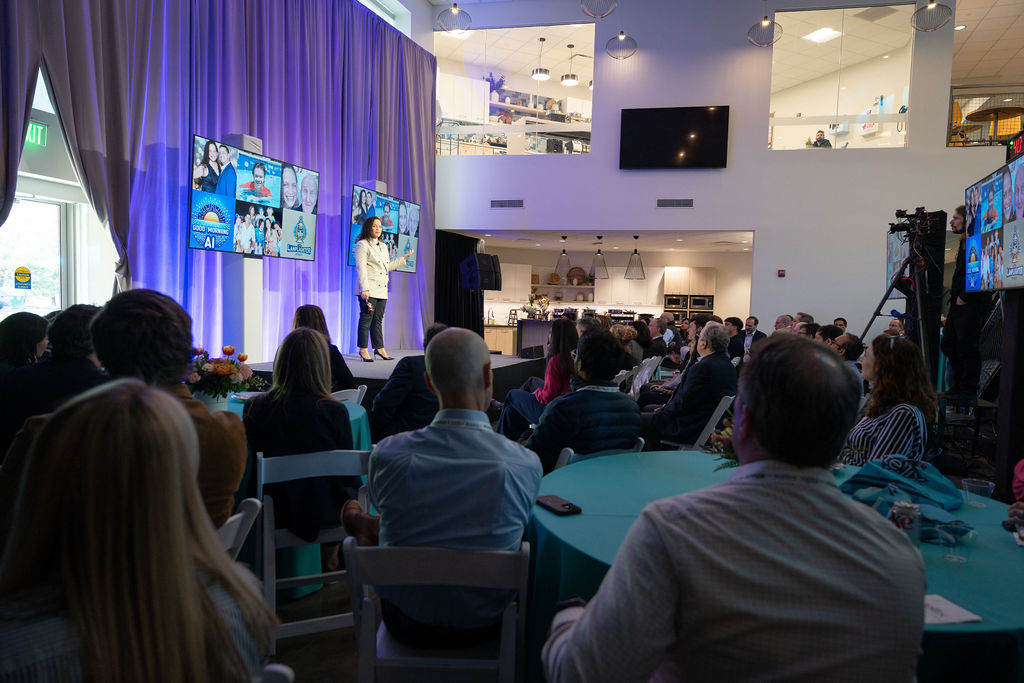
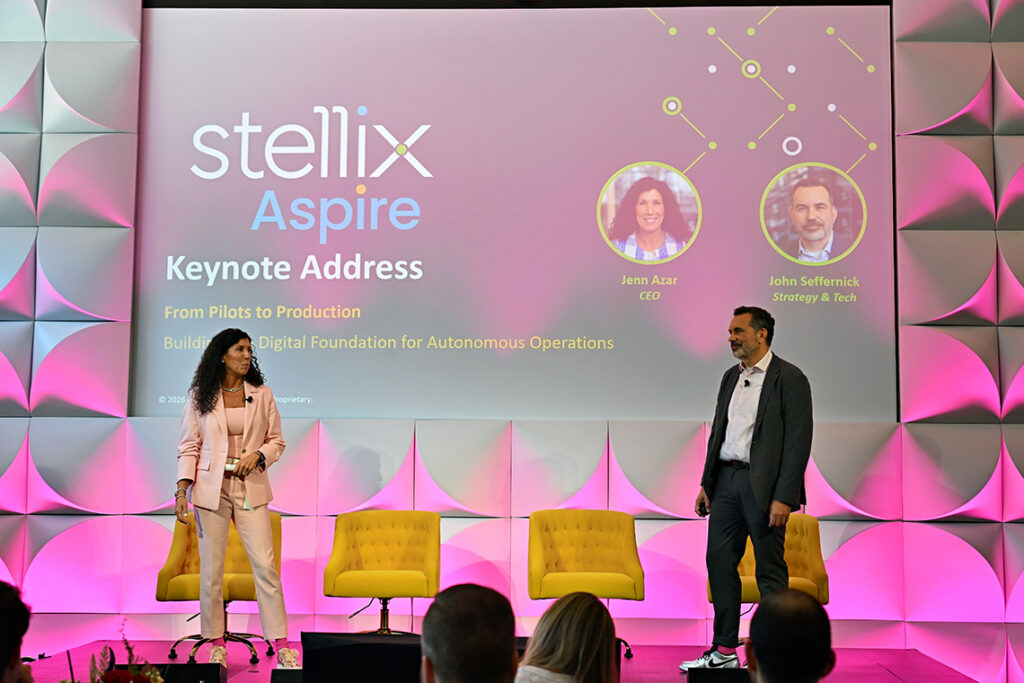
On April 9, we gathered at Stellix for our first Aspire session of 2026 with a question that has been following me into nearly every executive conversation over the past year:
How do we move AI from experimentation to real operational impact in environments as regulated and mission‑critical as life sciences?
Many of you in the room have watched initiative after initiative stall in pilot phase—not because the technology doesn’t work, but because scaling AI in this context demands clarity on the problem, trust across functions, and disciplined execution. In our world, the stakes are not abstract. Every decision in a lab, on the manufacturing floor, or across the supply chain has a direct line to a patient who may be waiting on a life‑saving therapy.
That tension—between bold innovation and uncompromising responsibility—is why we created Aspire, and why I was so eager to host Noelle Russell as our keynote speaker this year.
Noelle is the author of Scaling Responsible AI and one of the sharpest practitioners I’ve encountered on what it really takes to deploy AI at enterprise scale. She has built production systems for some of the most demanding environments in the world, including Amazon Alexa and Microsoft’s AI platforms. She does this while being a wife and mother of six—a fact that says as much about her resilience and pragmatism as her resume does about her technical depth.
Her talk anchored four themes that, together, offer a roadmap for any life sciences organization serious about moving AI from pilots to production.
1. The “Baby Tiger” Problem: Plan for the Animal You’re Actually Adopting
Noelle’s most memorable metaphor was the “baby tiger”.
We are, as she put it, in a moment where baby tigers are everywhere—small, impressive AI models and tools that look friendly enough in the sandbox. The problem is not adopting them; it’s what happens next.
When you bring a baby tiger into your organization, there are three questions you must ask from day one:
- How big will it get? Every model you deploy will grow in impact, usage, and risk if it succeeds. Treating it like a toy rather than the foundation of a critical capability is how “experiments” quietly become production systems without the safety rails they need.
- What will it eat? The tiger survives on data. If you don’t understand what data feeds the model, where that data comes from, and what rights and protections are attached to it, you’re operating blind. In life sciences, that can mean anything from manufacturing batch records to highly sensitive patient and genomic data.
- What happens when you don’t want it anymore? Noelle reminded us of the real‑world consequences when a company built on DNA data was broken up and its assets sold. The data didn’t disappear; it just changed hands. In AI terms, if you haven’t considered exit and end‑of‑life upfront—how models, weights, and underlying data will be governed, retired, or transferred—you’ve left one of your largest risk surfaces unmanaged.
Her point was blunt: baby tigers grow into big tigers, and big tigers can hurt people if we’re careless. In highly regulated, high‑stakes environments, we cannot afford to “just try things” and hope they behave.
At Stellix, this is exactly why we frame AI initiatives around operational foresight—not just what a model can do today, but what it becomes when it’s relied on every hour of every day, across plants, regions, and partners.
2. Operational Foresight: From Data to Decisions to Patient Outcomes
When I opened Aspire, I shared how we at Stellix think about AI:
AI is not a buzzword; it’s a foundation for operational foresight—the ability to anticipate, adapt, and act faster than the complexity around us. It’s about turning data into decisions, and decisions into outcomes for patients.
Noelle’s examples brought that to life.
She described work in predictive maintenance, intelligent failure detection, and process intelligence where AI systems no longer simply answer questions after something goes wrong; they predict failures before they occur, surface anomalies in real time, and allow teams to intervene before a deviation becomes a deviation.
For life sciences leaders, that doesn’t mean chasing futuristic visions. It means asking very grounded questions:
- Where are we still reacting—scrambling after a quality event, a batch failure, or a supply disruption—when we’ve had the data all along to see it coming?
- How do we use the data we’ve been collecting for decades to sense risk earlier and act faster, without compromising compliance?
This is the promise of operational foresight: using AI not to add complexity, but to see through it, so that your quality, manufacturing, and supply teams can make better calls in the moments that matter most.
3. Practical Guidance: Three P’s, Minimal Remarkable Products, and Fixing What’s Broken
One of the reasons I wanted Noelle at Aspire is that she is relentlessly practical. She spends less time on vision statements and more on the unglamorous work that actually makes AI scale safely.
Three ideas in particular resonated with the room.
The Three P’s of Responsible AI Design
Noelle offered a simple but powerful framing for any AI initiative:
- Purpose Every bot, agent, or model must have a clear, narrow purpose. Vague intents (“help our scientists be more productive”) are a breeding ground for drift, bias, and surprises. Tight intent (“summarize deviations in this specific system for this specific team”) creates the constraints regulated environments demand.
- People (Audience) You must know exactly who you are serving. A model for line operators is not the same as one for QA reviewers or regulatory teams. Their context, incentives, and risk tolerances differ dramatically. Designing “for everyone” usually ends in adoption by no one.
- Portfolio (Data Control) Finally, you need a deliberate portfolio of data: what is used to answer questions in the moment versus what is allowed to shape the model itself. Too many organizations blend operational data and training data indiscriminately, losing control over provenance and exposing themselves to risks they never intended to take.
- For life sciences, the Three P’s offer a checklist: Is this use case purpose‑built? Are the people clear? Is the data portfolio controlled? If you can’t answer yes to all three, you’re not ready to scale.
Minimal Remarkable Products
Another concept that stuck with many of you was the idea of a “minimal remarkable product.”
Instead of chasing a sweeping AI platform, Noelle advocated for something much smaller and more disciplined:
- Find one narrow, real problem that people wrestle with every day.
- Build a tool that is simple, safe, and genuinely helpful—remarkable not because it’s flashy, but because people actually use it.
- Measure adoption relentlessly; once people rely on it daily, layer in additional, carefully‑governed capabilities.
In other words: daily use beats grand ambition. In a GxP context, a tool that reliably saves investigators 15 minutes per record review—day after day, in a controlled environment—is far more valuable than a slide about “transforming end‑to‑end quality with AI.”
Optimize What’s Already Broken
Perhaps the most challenging advice Noelle gave was also the most freeing:
Don’t start with new ideas. Optimize what’s already broken.
Across industries, she’s seen the same pattern: organizations leap to net‑new concepts while the processes everyone quietly hates—aging systems, manual handoffs, opaque queues—remain untouched.
In life sciences, those “1980s apps” and spreadsheet‑based processes are everywhere:
- Repeatable manual reconciliations
- Multi‑step documentation flows
- Investigations that hinge on tribal knowledge
You don’t need a moonshot model to create value. You need focused, well‑governed AI systems that close known gaps, shorten timeframes, and make the work people already do safer and more reliable.
At Stellix, this is the heart of our operational foresight work: walking the process, listening for friction, and helping teams apply AI where the pain is already obvious—and the guardrails can be clearly defined.
4. The Human Element: When Efficiency Backfires
For all of the technical depth in Noelle’s talk, the story that landed hardest was a deeply human one.
Early in her career, she observed a group of nurses during shift change. She watched them spend roughly an hour and twenty minutes handing off patients and thought, as many technologists would, “What a waste of time.”
So she built an app. With her solution, nurses could complete the exchange in about ten minutes. Data flowed cleanly. Every field was captured. On paper, it was a triumph of efficiency.
Then she brought it back to the nurses.
One of them stood up—kind, composed, and clear. She told Noelle, in effect:
You’ve just taken away the one time we have to be together. The time when we decompress, share what really happened in the last shift, and support one another. You compressed our only moment of human connection into ten minutes of form‑filling.
Noelle realized what many of us in this field have had to learn the hard way: when we design solely for efficiency, AI accelerates bad behavior. It can make a dehumanizing process faster, at scale.
In our Aspire discussion, this story brought us back to a few sobering truths:
- Adoption is not a technical problem alone. The number one non‑technical reason AI projects fail is unwillingness to adopt new tools—often because people don’t see what’s in it for them, or they feel something human is being taken away.
- You cannot design responsible AI from a conference room alone. You need to invite legal, compliance, quality, and frontline staff into the work from the beginning, not the end.
- Models only get better through user interaction. If we build systems that ignore human insight—or worse, erase the spaces where that insight is shared—we shouldn’t be surprised when trust erodes and adoption stalls.
For a sector that exists to serve patients, this is not a peripheral concern; it’s the core. Responsible AI in life sciences must start and end with human understanding.
Where We Go From Here
As I looked around the room during Aspire, I saw something that continues to give me hope: quality leaders, digital leads, manufacturing heads, and site directors sitting together, wrestling with the same hard questions. The silos that usually keep these conversations apart were, at least for an afternoon, set aside.
The work ahead of us is demanding. We will have to treat our AI systems like the baby tigers they are—fascinating, powerful, never to be left unattended. We will need to design with purpose, for specific people, on controlled portfolios of data. We will need the discipline to fix what’s broken before we chase what’s new, and the humility to sit beside the people whose work we are trying to change.
If we do that, AI in life sciences will be more than a set of pilots. It will become part of how we anticipate, adapt, and act—with the speed our patients deserve and the care they are owed.
Jenn Azar, CEO, Stellix

Continue Exploring